
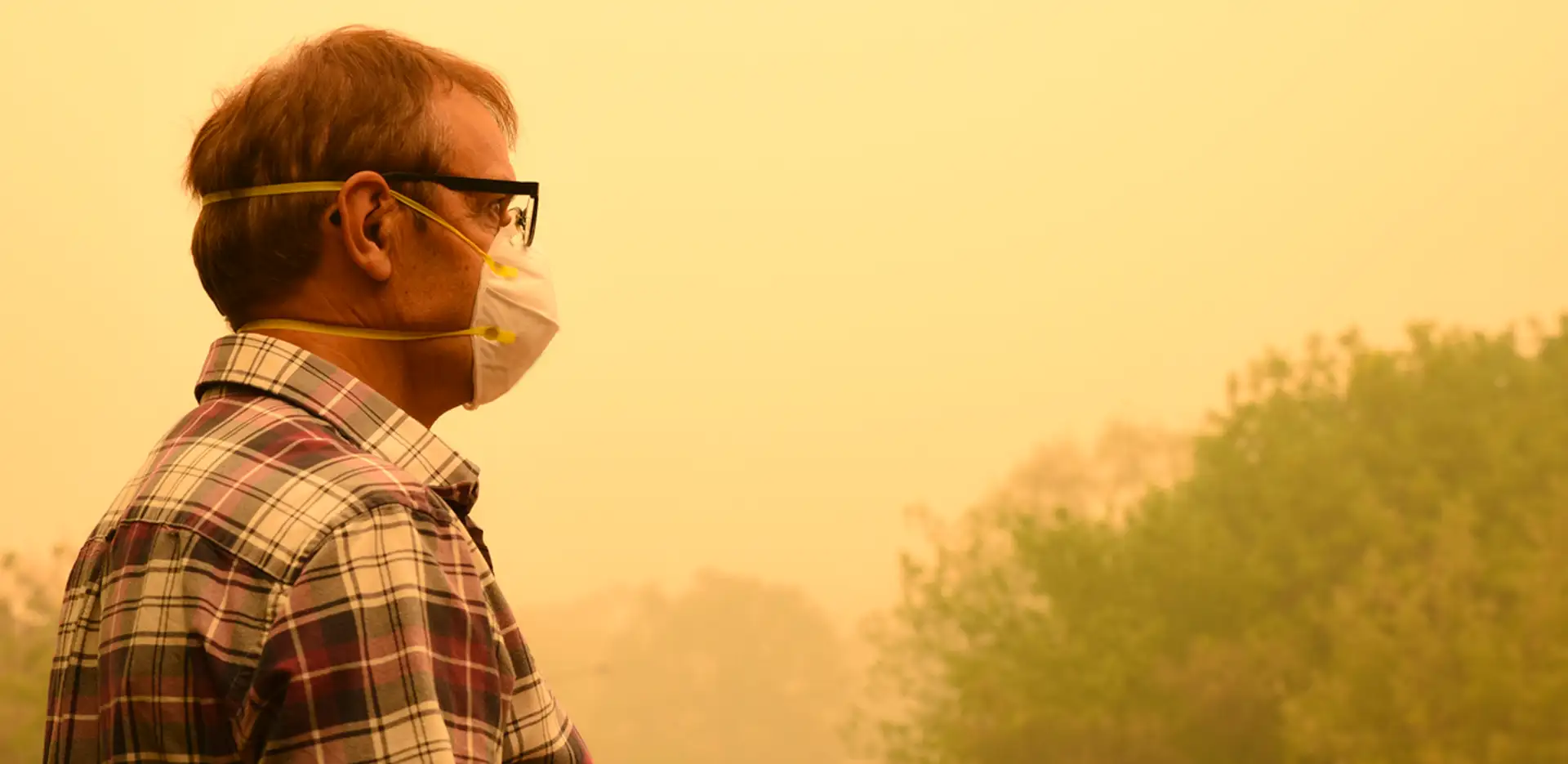
While a handful of states have laws or regulations requiring employers to protect workers from wildfire smoke hazards, Fed-OSHA has no such rules. However, companies not in those states are still subject to the Occupational Safety and Health Act’s general duty clause, which requires employers to provide a workplace free from recognized hazards that can cause death or serious physical harm.
Outdoor workers face the most immediate danger from wildfire smoke, but it can also affect indoor staff if the ventilation system is poor or when they walk from the parking lot to the office.
Besides the regulatory threat, there is also a human risk. Wildfire smoke may cause health emergencies for people with:
Respiratory issues — Asthma, chronic obstructive pulmonary disease and bronchitis.
Cardiovascular conditions — Hypertension and coronary artery disease.
Other conditions — Migraines, diabetes and severe seasonal allergies.
It also may present additional health risks for pregnant women and anyone at higher risk of heart attack or stroke.
What employers can do
Absent Fed-OSHA regulations, employers can follow the laws and regulations in California, Nevada and Washington. They all use an unhealthy air quality index as the barometer for when employers should take action to protect workers.
In locations with an unhealthy AQI, employers may consider adjusting work schedules, reducing the physical demands of work, providing respiratory devices or moving work indoors if possible.
No matter where you are located, consider California’s regulations as a starting point for protecting your staff from wildfire smoke:
The trigger — Several websites track AQI, including AirNow and PurpleAir, in addition to thousands of local air quality websites nationwide.
When the AQI reaches 150 or higher for particulate matter known as PM2.5, employers have three options for protecting their workers:
- Move the worksite to a location where the air is not unhealthy,
- Alter work duties or schedules to reduce time in unhealthy air, or
- Provide respirators like N95 masks and encourage their use.
If the AQI exceeds 500, employees are required to wear respirators.
Training — Employers with outdoor workers in areas susceptible to wildfire smoke should train staff on:
- How to properly use N95 masks,
- The health dangers of wildfire smoke, and
- Steps the company is taking to protect them from wildfire smoke.
Encourage workers to inform supervisors if they notice the air quality is getting worse, or if they are suffering from any symptoms due to the air quality, without fear of reprisal.
Steps to take during wildfires — Monitor the AQI in your area. Alert your workers when the air quality is harmful and tell them what protective measures are available.
If you plan to encourage the use of N95 masks, it’s best to provide them. They are widely available and inexpensive. Inform your staff that surgical masks or items worn over the nose and mouth, such as scarves, T-shirts and bandannas, do not provide protection against wildfire smoke.