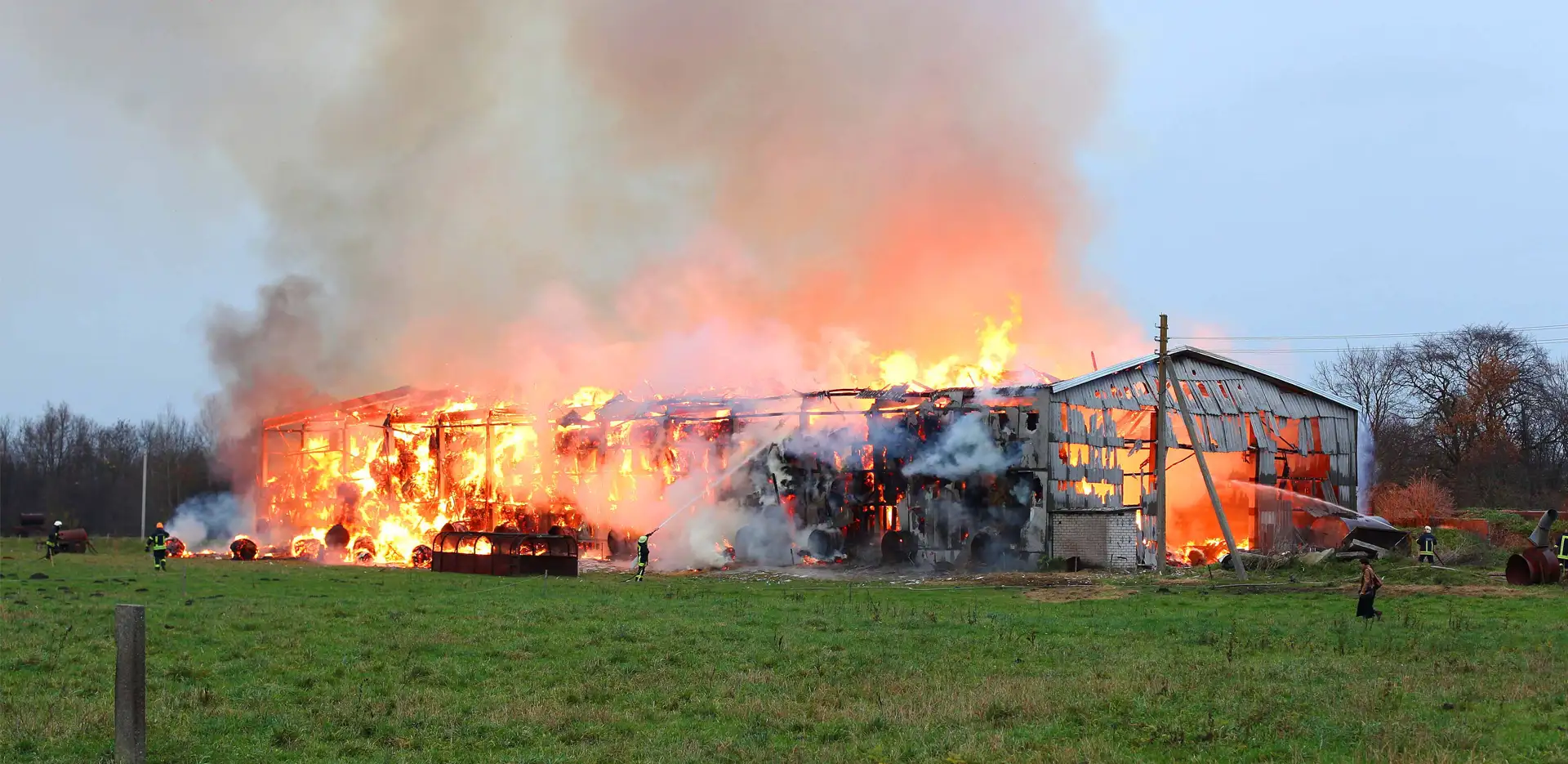
A farm fire can raze entire buildings and silos, destroy machinery, burn inventory, and result in worker injuries or deaths.
Even after an insurer pays the claim, some companies are unable to rebuild and restart operations due to the losses they sustained when they were inoperable.
Operators should be focused on protecting their operations against fires, as well as on risk management.
Farm buildings and processing facilities
Many agricultural processing facilities produce a great deal of waste, including particles of various sizes that can settle and build up on surfaces on walls, inventory, rafters and ledges, furniture, fittings, and fixtures.
Particles can also settle on machinery, floors, pipes, and fans, where there’s a greater risk the deposits can combust and start a fire that quickly grows.
To mitigate the risk of fire, agricultural processing facilities should invest in fire-suppression systems such as sprinklers, fire extinguishers, and fire alarms. They should also establish processes for handling and storing flammable and combustible liquids.
Other fire safety tips include the following:
- All farm buildings, regardless of size, should have a minimum of two exits, both easily accessible.
- Use building materials that are flame-retardant or fire-resistant.
- Install and maintain lightning rods and grounding cables.
- Practice good housekeeping; cobwebs and dust are combustibles.
- Remove brush, weeds and tall grass from around buildings. Keeping a clean, clear space around buildings and general yard areas can help reduce the risk of fire spreading from one building to another.
- Keep compressed air cylinders in good repair; protect valves from mechanical damage.
- Provide adequate ventilation in work areas to reduce carbon monoxide or fume build up.
Controlling sources of ignition
Understanding how to prevent fires from starting is essential in protecting your farm or agribusiness from fire loss. You should:
- Enforce a “no-smoking” policy on the premises.
- Make sure all hazardous, flammable and combustible materials such as herbicides, insecticides, fungicides, fertilizers, gasoline, kerosene, paint thinners, and paper are properly stored in labeled containers away from possible ignition sources.
- Properly maintain engines, motors, and machinery, and clean them regularly to prevent malfunction and overheating.
- Make sure equipment is turned off and allowed to cool before refueling, and refuel outdoors. Maintain adequate clearance for combustibles around heaters.
- Always obtain the proper burning permits before burning any brush or grass, and keep burn piles well away from buildings.
A few extra tips
- Keep at least one ABC type extinguisher in every farm building and in other areas where there is a risk of a fire, such as around grain drying and processing equipment.
- Make sure all employees know where they are located. Before using a fan, portable heater, or heat lamp in farm buildings, be certain it is designed for agricultural or industrial use. The fire risk is extremely high when residential products are used in farm buildings.
- Consider installing additional smoke detectors, fire alarms, and fire sprinkler systems.
Insurance
A final word about insurance: the cost of farm property insurance has been on the rise and in some areas of the country that are more susceptible to natural catastrophes, agricultural operations are seeing large premium increases.
Nevertheless, it’s an essential part of your risk management package and can provide the financial support needed to survive asignificant setback and continue operations. Many property policies also include business interruption insurance, which can pay for lost revenues if you are unable to operate after a fire.