
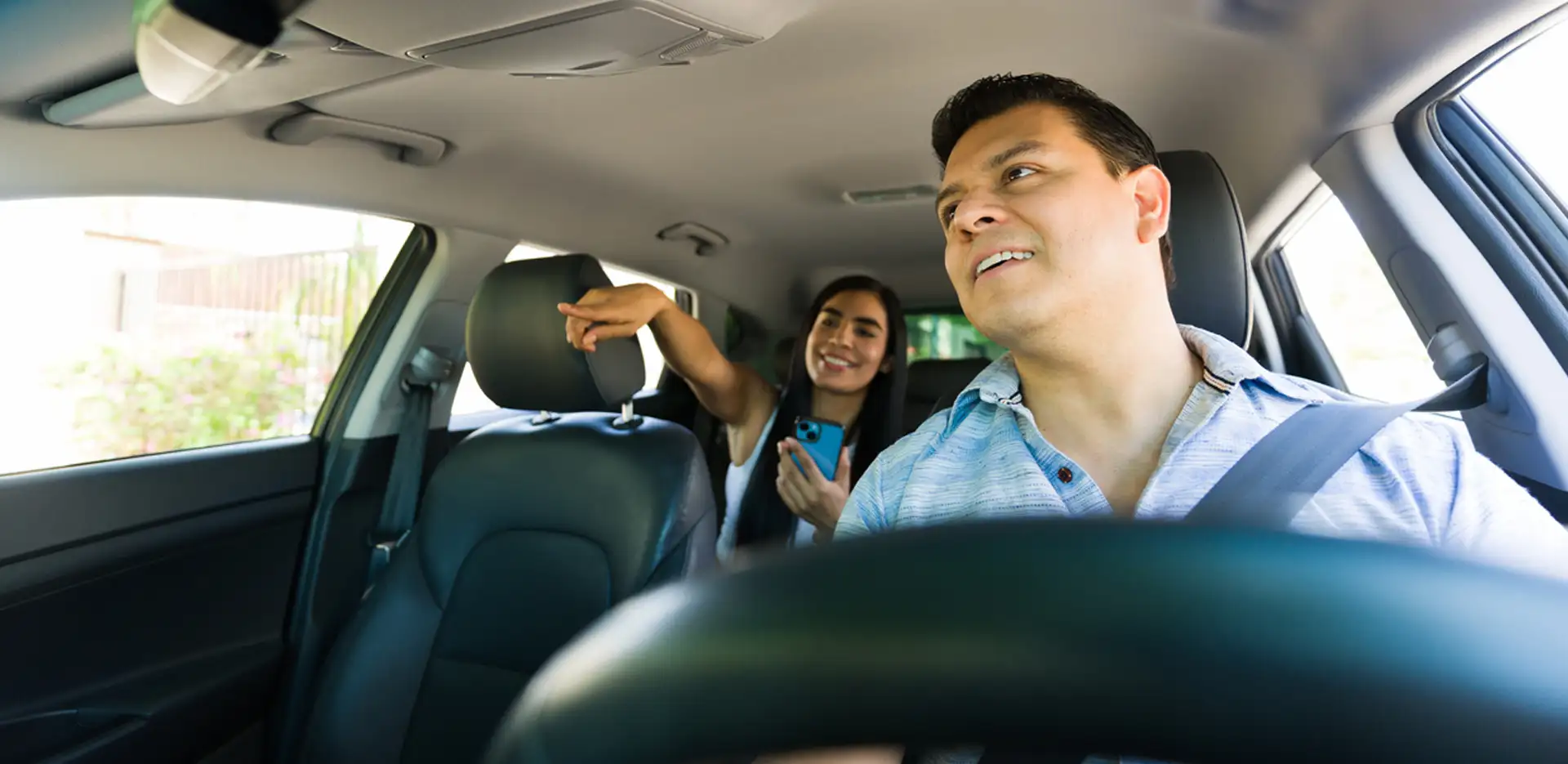
The money can be good, but it’s important to understand the insurance implications of using your own vehicle to shuttle passengers or food to earn income.
Uber, Uber Eats and DoorDash carry their own insurance that will cover drivers for damage they cause to a third party’s property, or injuries to passengers or other individuals. But other companies’ coverage varies and puts the insurance responsibility on the drivers.
Ride and food delivery apps that do offer insurance have policies that are specific about the times during which they will cover passengers or drivers. Many companies will cover you from the time you’ve accepted a job to the time the food is delivered, or the passengers reach their destination and exit the vehicle.
For all those times you are not covered, you would likely not be able to count on your personal auto policy to cover an accident for which you are found at fault.
The coverage gap
Most insurers use the standard personal auto insurance policy created by the Insurance Services Office, which excludes coverage if the vehicle is used for business purposes, including accepting passengers and making deliveries for income.
Policies preclude coverage for any liability, medical payments and physical damage arising from this type of activity. Even insurers that don’t use the ISO forms and instead have their own will typically exclude coverage for business purposes.
This creates a coverage gap. If you drive for an app that requires your insurance to cover damages of an accident, they would likely decline the claim, leaving you paying out of pocket. As well, if their insurance limits are insufficient, you’d be left holding the bag, which could be a hefty tab in case of a destructive accident.
Apps and their insurance
As of August 2024, the following applied:
DoorDash — Commercial car insurance coverage of up to $1 million in bodily injury or property damage for when you’re on “active delivery” time. During “delivery available” periods, coverage includes up to $100,000 for third party bodily injuries and $25,000 for property damage.
It will not cover damage to your car.
GrubHub — GrubHub won’t offer any commercial car insurance coverage. You must have your own personal automobile liability insurance and comply with your state’s minimum liability standards.
Instacart — This online operator doesn’t offer any insurance for its drivers. You’re responsible for having your own personal or commercial liability car insurance that meets your state’s requirements.
Uber and UberEats — Insurance that covers at least $1 million for property damage and injuries to riders and third parties involved in an accident where you’re at fault.
The online operator also offers insurance that covers the cost to repair your car, up to the actual cash value, with a $2,500 deductible, contingent on your personal insurance including comprehensive and collision coverage. This extra insurance maintained by Uber protects your car, no matter who’s at fault, if you maintain comprehensive and collision coverage on your own vehicle.
The takeaway
As you can see from the above examples, insurance issues are largely your responsibility with some apps. Many personal auto policies will not provide coverage, or may provide limited coverage, meaning you would be on the hook for any damage or injuries you cause while driving for them.
While some apps provide coverage, the limits may be far below real-world costs, particularly if someone is injured or if you damage a luxury car. For example, a property damage limit of $25,000 would not be enough if you total a BMW 7 series sedan.
If you are planning to drive for one of these apps or already are, you should call us and ask about your options to avoid the coverage gap or lack of coverage.
It’s recommended that you secure additional coverage by purchasing rideshare or delivery service insurance either as a stand-alone policy or a rider on your current policy. This may provide a coverage for the gap you face when driving for one of these companies.
You should also exceed your state’s liability coverage limits on your personal plan, as they are woefully low in most states.